Cristian Ioanide - In Memoriam
"In principle, every difference between two related languages should be explicable to a high degree of plausibility and systematic changes, for example in phonological or morphological systems are expected to be highly regular (i.e. consistent). In practice, the comparison may be more restricted, e.g. just to the lexicon."
https://en.wikipedia.org/wiki/Comparative_linguistics
The generally accepted Indo-European theory in linguistics states that all languages in Europe and India have a common ancestor, the hypothetical PIE or Proto-Indo-European language.
However there are major disagreements regarding this hypothetical language and the reconstruction attempts so far lay in the domain of bizarre. No serious academic attention had been directed into reconstructing this hypothetical language.
In dictionaries so far (like the Romanian Explicative Dictionary or DEX) though there are many basic words deemed as of unknown origin, generally attributed by some authors, mostly biased pseudo-nationalist, to the Dacian language or the language we all assume it was spoken in Dacia before Romans arrived, there is not on single etymology given as PIE.
In French i haven't seen a single word given of unknown etymology or as PIE but in both languages i found plenty of words that certainly remind me of Sanskrit.
The English lexis may be also as rich as Romanian in Sanskrit roots. Interestingly enough, the Sanskrit words are distributed in different European languages, as if Sanskrit divided or broke to pieces and distributed in separate chunks or lists of words to different inheriting languages though many are overlapping, like from English and Romanian.
It is almost impossible to believe that Romans did not keep or no archives are found regarding the different aspects of life in Dacia during their direct administration period which lasted some 165 years including basic lexis or pieces of written language. No written records are to be found in any archive about the Dacian language (with some dubious exceptions).
The subject of such records being hidden in archives for political reasons or even destroyed is a completely different story i won't start to dig in right now.
So personally following an intuition triggered by some anecdotal information i found in an article i read in Romania in early 90s which stated that a numbered a Romanian basic words of unclear etymologies in current dictionaries are matching with perfectly similar Sanskrit ones like apa-apa (water), gand-gandiva (thought) etc. i tried to look in current online dictionaries like spokensankrit.org (formerly .de) just to verify.
To my surprise they all seemed to have a Sanskrit correspondent, almost identical, down to pronunciation, so that article i read long ago was correct.
So i took the list of Romanian words of unknown origin (Wikipedia version) and started to look in that dictionary for more matches and found an abundance of words of undoubtful (to me) Sanskrit origin and started to build my own list, on a google spreadsheet.
The online dictionary mentioned above that is based on the widely recognized Monier Williams Sanskrit dictionary which is also available online from the University of Koln and while still not complete it numbers over half million entries.
There are in there words that have obviously too many entered meanings [by volunteering contributors] of which some being even opposite, many probably coming from only one occurrence in an isolated text or maybe used as metaphors. No one can tell.
But i was pretty conservative in building this list and picked correspondences only from the roughly first 10-20% of meanings confirmed by the most redundant (or close meanings) in the rest of the meanings staying safe in the Monier Wiliams area.
Interestingly, there are words, like gata that have the same corresponding many meanings both in Romanian and Sanskrit and this is obvious only for those who know Romanian as i cannot add more entries for words with different meaning in Romania being beyond the current purpose of this modest work.
While browsing the dictionary i started to find more and more words from the basic or day to day usage Romanian language lexis that where not on that list having a greater resemblance with Sanskrit words than with Latin or Old Slavonic (the precursor of all modern Slavic languages) words given as official etymologies in Romanian dictionaries and i started to add them on that spreadsheet.
"In principle, every difference between two related languages should be explicable to a high degree of plausibility and systematic changes, for example in phonological or morphological systems are expected to be highly regular (i.e. consistent). In practice, the comparison may be more restricted, e.g. just to the lexicon."
https://en.wikipedia.org/wiki/Comparative_linguistics
The generally accepted Indo-European theory in linguistics states that all languages in Europe and India have a common ancestor, the hypothetical PIE or Proto-Indo-European language.
However there are major disagreements regarding this hypothetical language and the reconstruction attempts so far lay in the domain of bizarre. No serious academic attention had been directed into reconstructing this hypothetical language.
In dictionaries so far (like the Romanian Explicative Dictionary or DEX) though there are many basic words deemed as of unknown origin, generally attributed by some authors, mostly biased pseudo-nationalist, to the Dacian language or the language we all assume it was spoken in Dacia before Romans arrived, there is not on single etymology given as PIE.
In French i haven't seen a single word given of unknown etymology or as PIE but in both languages i found plenty of words that certainly remind me of Sanskrit.
The English lexis may be also as rich as Romanian in Sanskrit roots. Interestingly enough, the Sanskrit words are distributed in different European languages, as if Sanskrit divided or broke to pieces and distributed in separate chunks or lists of words to different inheriting languages though many are overlapping, like from English and Romanian.
It is almost impossible to believe that Romans did not keep or no archives are found regarding the different aspects of life in Dacia during their direct administration period which lasted some 165 years including basic lexis or pieces of written language. No written records are to be found in any archive about the Dacian language (with some dubious exceptions).
The subject of such records being hidden in archives for political reasons or even destroyed is a completely different story i won't start to dig in right now.
So personally following an intuition triggered by some anecdotal information i found in an article i read in Romania in early 90s which stated that a numbered a Romanian basic words of unclear etymologies in current dictionaries are matching with perfectly similar Sanskrit ones like apa-apa (water), gand-gandiva (thought) etc. i tried to look in current online dictionaries like spokensankrit.org (formerly .de) just to verify.
To my surprise they all seemed to have a Sanskrit correspondent, almost identical, down to pronunciation, so that article i read long ago was correct.
So i took the list of Romanian words of unknown origin (Wikipedia version) and started to look in that dictionary for more matches and found an abundance of words of undoubtful (to me) Sanskrit origin and started to build my own list, on a google spreadsheet.
The online dictionary mentioned above that is based on the widely recognized Monier Williams Sanskrit dictionary which is also available online from the University of Koln and while still not complete it numbers over half million entries.
There are in there words that have obviously too many entered meanings [by volunteering contributors] of which some being even opposite, many probably coming from only one occurrence in an isolated text or maybe used as metaphors. No one can tell.
But i was pretty conservative in building this list and picked correspondences only from the roughly first 10-20% of meanings confirmed by the most redundant (or close meanings) in the rest of the meanings staying safe in the Monier Wiliams area.
Interestingly, there are words, like gata that have the same corresponding many meanings both in Romanian and Sanskrit and this is obvious only for those who know Romanian as i cannot add more entries for words with different meaning in Romania being beyond the current purpose of this modest work.
While browsing the dictionary i started to find more and more words from the basic or day to day usage Romanian language lexis that where not on that list having a greater resemblance with Sanskrit words than with Latin or Old Slavonic (the precursor of all modern Slavic languages) words given as official etymologies in Romanian dictionaries and i started to add them on that spreadsheet.
I also added verbs that seem similar in writing, pronunciation and meaning with nouns and adjectives in Romanian. https://sanskritstudio.wordpress.com/2013/03/05/the-sanskrit-past-passive-participle/.
I am not a linguist but i assume in a few thousands years of separation from source some past participles may have morphed into adjectives and even nouns. Same thing happened in the online dictionary itself where some nouns from Sanskrit are translated like verbs in English or the other way around.
Also while browsing this online dictionary i had the pleasant surprise to come across many English words that seem to have a direct correspondent in Sanskrit of which some i added in a smaller list that is also included in this blog post.
My conclusion so far is there are many Sanskrit words in Romanian, maybe as many as 50% of the lexis of Romanian, but when they match, some of them identically as pronunciation, most of the time they do not coincide as first meaning. I think this indicates a strong but very old connection.
Could the reason for finding so many Romanian words of plausible Sanskrit origin be Dacian language was closed to Sanskrit which was also close to PIE.
It is up to linguists in the future to follow these hypotheses, if they find my work intriguing.
But i am also afraid many already knew about all these complex and contradictory issues, since i don't know, the first contact of modern western civilization with the eastern one, probably since German linguists Franz Bopp built the first known grammar of Sanskrit and for some obvious political reasons they chose to delay their findings until people of the world will be able to better deal with the Indo-European linguistic theory that if was to be applied would probably require extensive rewriting of dictionaries and why not, maybe history itself.
https://en.wikipedia.org/wiki/Franz_Bopp
When i first started to study the lexis of Sanskrit i started to ask myself how i will pronounce the words.
In the end i realized the pronunciation follows pretty much Latin, as the several existing transliteration types use mainly Latin alphabet.
However there is an alternate way to figure pronunciation. Since Google Translate cannot translate Sanskrit and there is no other site on the internet that i know of that can pronounce any typed words in Devanagari script one can trick Google Translate to pronounce Sanskrit as Hindi since Hindi uses the same alphabet and almost the same pronunciation.
So i added links to every word in the list (done with Google Spreadsheets) written in Sanskrit with Devanagari script so you can click on then on the little speaker icon under the box where the word appears to hear the pronunciation. Most of those words do not even exist in Hindi.
I am not a linguist but i assume in a few thousands years of separation from source some past participles may have morphed into adjectives and even nouns. Same thing happened in the online dictionary itself where some nouns from Sanskrit are translated like verbs in English or the other way around.
Also while browsing this online dictionary i had the pleasant surprise to come across many English words that seem to have a direct correspondent in Sanskrit of which some i added in a smaller list that is also included in this blog post.
My conclusion so far is there are many Sanskrit words in Romanian, maybe as many as 50% of the lexis of Romanian, but when they match, some of them identically as pronunciation, most of the time they do not coincide as first meaning. I think this indicates a strong but very old connection.
Could the reason for finding so many Romanian words of plausible Sanskrit origin be Dacian language was closed to Sanskrit which was also close to PIE.
It is up to linguists in the future to follow these hypotheses, if they find my work intriguing.
But i am also afraid many already knew about all these complex and contradictory issues, since i don't know, the first contact of modern western civilization with the eastern one, probably since German linguists Franz Bopp built the first known grammar of Sanskrit and for some obvious political reasons they chose to delay their findings until people of the world will be able to better deal with the Indo-European linguistic theory that if was to be applied would probably require extensive rewriting of dictionaries and why not, maybe history itself.
https://en.wikipedia.org/wiki/Franz_Bopp
When i first started to study the lexis of Sanskrit i started to ask myself how i will pronounce the words.
In the end i realized the pronunciation follows pretty much Latin, as the several existing transliteration types use mainly Latin alphabet.
However there is an alternate way to figure pronunciation. Since Google Translate cannot translate Sanskrit and there is no other site on the internet that i know of that can pronounce any typed words in Devanagari script one can trick Google Translate to pronounce Sanskrit as Hindi since Hindi uses the same alphabet and almost the same pronunciation.
So i added links to every word in the list (done with Google Spreadsheets) written in Sanskrit with Devanagari script so you can click on then on the little speaker icon under the box where the word appears to hear the pronunciation. Most of those words do not even exist in Hindi.
[currently google translate has a Sanskrit section, 7-29-2026].
There are also links provided for every Romanian word to Google Translate for both translation in English to eliminate any doubt and pronunciation for comparison of pronunciation with the paired Sanskrit words and also links for every Sanskrit word transliterated with Latin characters to different dictionaries where i found that word. There are more than 700 links in total.
Google Translate is not particularly good with Romanian phrases although lately it got much better. However, for individual words it is acceptable. The computer generated pronunciation in Romanian is kind of rough, compared to the one in Hindi, but good enough for the purpose.
For Devanagari script pronunciation of each separate letter here is an easy to use interactive page.
http://www.digitaldialects.com/Hindi/alphabet.htm
For comparing the words i used the following on-line dictionaries and lists:
There are also links provided for every Romanian word to Google Translate for both translation in English to eliminate any doubt and pronunciation for comparison of pronunciation with the paired Sanskrit words and also links for every Sanskrit word transliterated with Latin characters to different dictionaries where i found that word. There are more than 700 links in total.
Google Translate is not particularly good with Romanian phrases although lately it got much better. However, for individual words it is acceptable. The computer generated pronunciation in Romanian is kind of rough, compared to the one in Hindi, but good enough for the purpose.
For Devanagari script pronunciation of each separate letter here is an easy to use interactive page.
http://www.digitaldialects.com/Hindi/alphabet.htm
https://www.google.com/search?q=Cuv.+autoht.+site%3Adexonline.ro%2F,
https://www.google.com/search?q=Et.+Nec.+site%3Adexonline.ro%2F
http://ro.wikipedia.org/wiki/List%C4%83_de_cuvinte_rom%C3%A2ne%C8%99ti_mo%C8%99tenite_probabil_din_limba_dac%C4%83
Sanskrit dictionary linkable per word and meaning
www.sanskritdictionary.com/ (default IAST transliteration)
Sanskrit dictionary linkable per word
http://spokensanskrit.org/
http://www.sanskrit-lexicon.uni-koeln.de/monier/indexcaller.php
Dictionary not linkable per word (need to manually input the words below)
http://www.sanskrit-lexicon.uni-koeln.de
For Devanagari script pronunciation of each separate letter here is an easy to use interactive page.
http://www.digitaldialects.com/Hindi/alphabet.htm
Here is also a link to a Google sheet that holds the same table with the table itself framed below in this blog post.
https://docs.google.com/spreadsheets/d/1rFNHh0hUZoX05HMLQmA041H2pGj3fAPdmwAoGkkkJMk/edit?usp=sharing
[On August 18 2017 i discovered spokensanskrit.de has changed to spokensanskrit.org and i had to redo all links]
Also here is a link to a much shorter list that probably could be much longer with English words that could have direct sanskrit etymology and also the table.
https://docs.google.com/spreadsheets/d/1Z30OzrhFN6aiqmK_cra0rv8z_wfRr0WJd9LxS5tsKrQ/edit?usp=sharing
http://upload.wikimedia.org/wikipedia/commons/2/24/Dacian_POW_IMG_6358.jpg
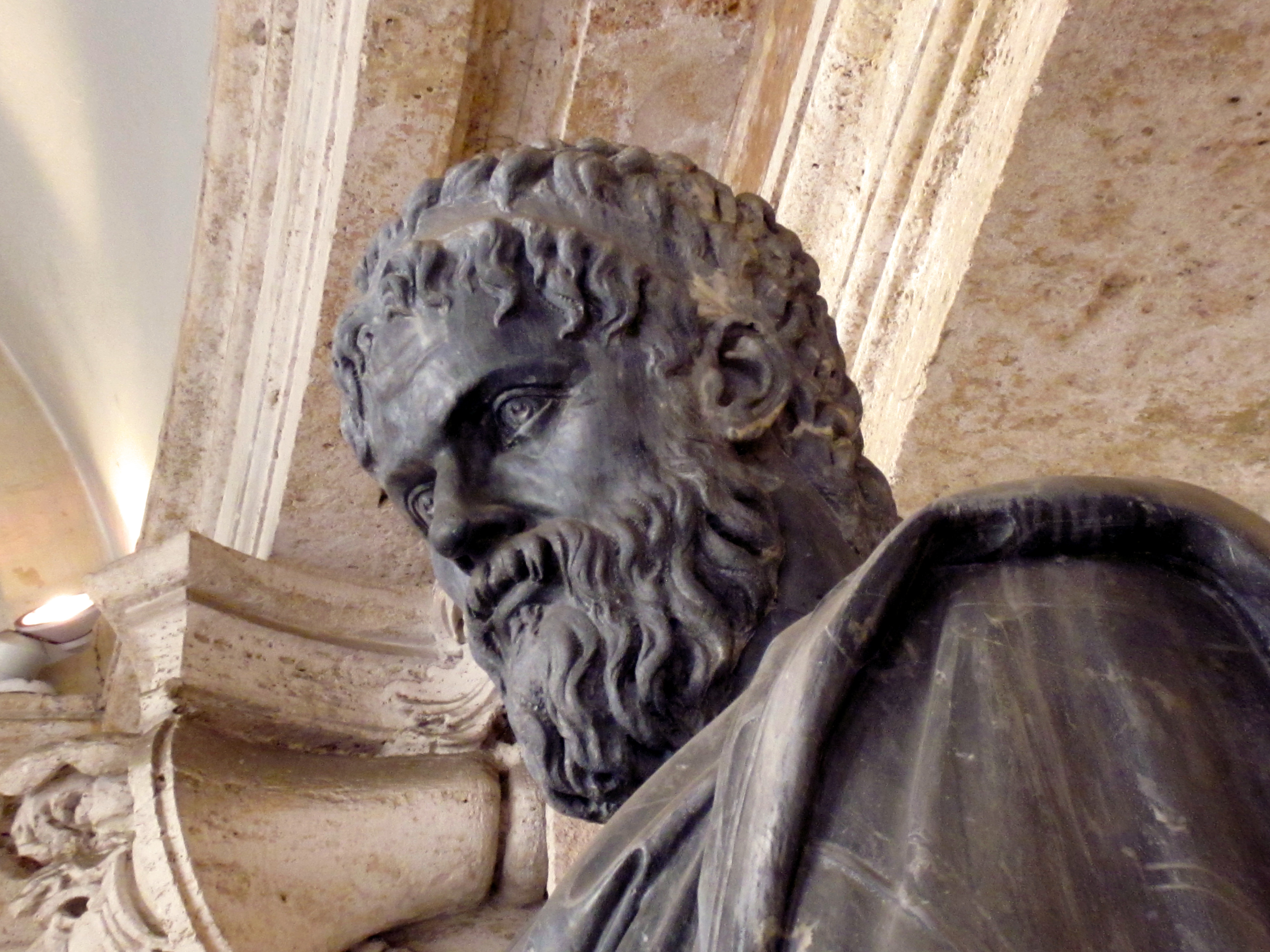 Roman Statue of a Dacian POW in 2nd century AD

